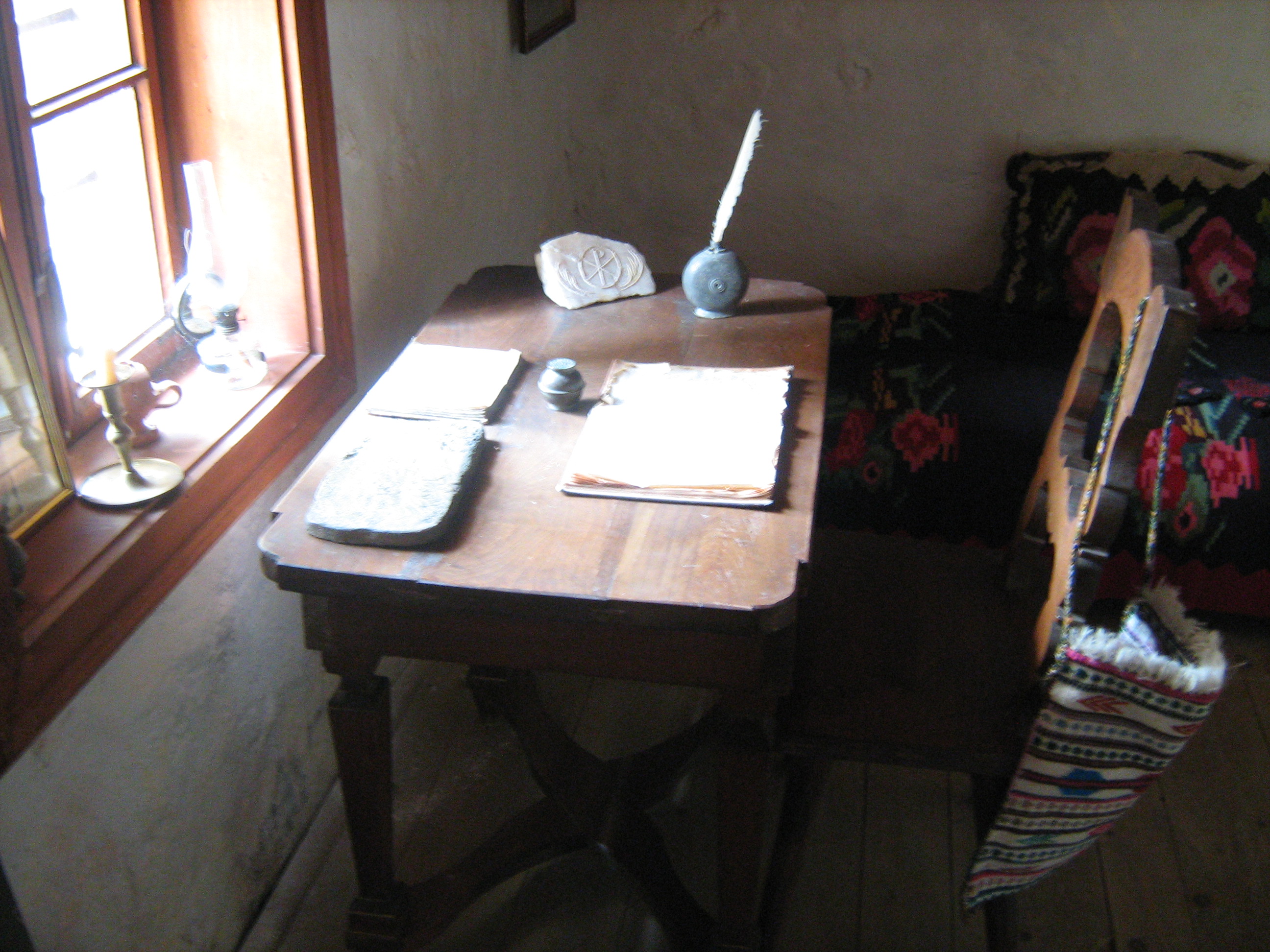
As most people will agree, life isn't always easy. It throws us curve ball after curve ball and doesn't bother to ask us if we're ready to deal with it. And deal with it we do. Until we're given more than we can handle.
Such was the case for me at the end of 2017. I have a chronic illness, so I haven't been well for years, but at the end if 2017 things took a turn for the worse. Doctors discovered a diffuse brain tumour, one they couldn't do a lot about. I couldn't be fixed. I cannot be fixed.
But there were things that could be done to control the symptoms. The tumour is slow growing, very slow, so was not in immediate danger. But it was still impairing my brain activity, still causing it's own set of problems. Without going into the details, it's taken an entire year to get to the point where I can return to work. Return to writing.
As anyone who has been forced on medical leave can attest, returning to work after a long illness is difficult. Beyond difficult. It is never an easy process. But when you're a writer, working from home, there are a whole new set of challenges.
First, it's motivation. I don't have a boss. I don't have someone hanging over me demanding work get done. My editor doesn't care if I work or not. No one does, really. So just sitting at the computer and pounding out some actual words can be a challenge. Forcing creative work is, while not impossible, very difficult.
But once I'm at the computer, ready to write, then what? What words do I write? What story? Where was I in that cruddy novel I was writing more than a year ago? Can I continue with that novel? Start a new novel? What novel? I need an idea and I need it now. Hello...
So, while I wait for that idea to arrive, I'll blog. I have multiple blogs about multiple topics. Dogs, horses, paganism, I write about a lot of things. Maybe I'll get back into the swing of things with some blogging.
Maybe...
Wish me luck!
Step into the world of LA Quill—author, storyteller, and writing mentor. This blog explores the craft of writing through tips, inspiration, and original fantasy fiction. Follow along as LA Quill builds new worlds, shares her creative process, and guides aspiring writers on their own storytelling journeys. Updates on upcoming books, articles, and future video content all in one place.
Friday, January 25, 2019
Friday, July 20, 2018
Writing a Novel: Types of Beginnings
When you first sit down to begin a novel, there are a variety of paths you can take. For the most part, you will have to decide if you're going to start a story with action or with description. Both can be intriguing and have the ability to grab the reader's attention. Generally, the two types of openings can be referred to as character in action or description of setting.
Character in action is exactly what it sounds like. There's a character, and he or she (or it?) is doing something. It doesn't have to be something flashy, though it might be. You could, for example, start your story with a girl witnessing her father's hanging. That's flashy, and appropriate if the story revolves around what the girl witnessed and how it affected her. But you might also start with the girl answering the door to a man who tells her her father has been hung. Less flashy, but just as appropriate if your story has little to do with the hanging and much more to do with the girl. Both are character in action scenarios, but they are very different from each other.
Description of setting is a more subtle way to begin a novel, but it is no less effective. You might begin your novel by exploring the environment that is about to become center stage in your story, but if you do this, the setting must be important. It must mean something either to the story or to the character you're about to meet. If your story begins with a wedding (or a funeral), you might begin my describing the scene before getting to the people. Or someone might be riding in a car, and you describe the setting, typically as it relates to the character and his or her emotions. This can be as intriguing as a character in action opening.
Ultimately, you have to decide which type of opening suits your story best. Writing a novel isn't an exact science, so what works for one story will not necessarily work for another. Don't let anyone tell you that you have to begin with action or that you have to jump into the meat of the story with the first sentence. You must find what serves your tale best.
Character in action is exactly what it sounds like. There's a character, and he or she (or it?) is doing something. It doesn't have to be something flashy, though it might be. You could, for example, start your story with a girl witnessing her father's hanging. That's flashy, and appropriate if the story revolves around what the girl witnessed and how it affected her. But you might also start with the girl answering the door to a man who tells her her father has been hung. Less flashy, but just as appropriate if your story has little to do with the hanging and much more to do with the girl. Both are character in action scenarios, but they are very different from each other.
Description of setting is a more subtle way to begin a novel, but it is no less effective. You might begin your novel by exploring the environment that is about to become center stage in your story, but if you do this, the setting must be important. It must mean something either to the story or to the character you're about to meet. If your story begins with a wedding (or a funeral), you might begin my describing the scene before getting to the people. Or someone might be riding in a car, and you describe the setting, typically as it relates to the character and his or her emotions. This can be as intriguing as a character in action opening.
Ultimately, you have to decide which type of opening suits your story best. Writing a novel isn't an exact science, so what works for one story will not necessarily work for another. Don't let anyone tell you that you have to begin with action or that you have to jump into the meat of the story with the first sentence. You must find what serves your tale best.
Friday, January 27, 2017
Writing a Novel: At the Beginning
Beginning a story can be great fun or something akin to torture depending on how you approach it. Some people hold that there are rules for beginning a novel. Don't start with the main character asleep or dreaming. Begin with impact. Grab the reader with the first line or everything is lost. While it is true that you have to hook your audience so they'll keep reading, the stakes aren't quite so high as some would have you believe. But the notion that the first line is all powerful is quite prevalent among novice writers, and leads to some truly ridiculous starts. I've seen fledgling novels that have someone decapitated in the first sentence or works where the first paragraph is so convoluted that it makes very little sense. These are not great ways to start a novel, though they certainly have impact, avoid the dreaded sleeping curse, and they had something happen in the first sentence. But that matters very little in the grand scheme of things.
Instead of focusing on imaginary rules, focus instead on an effective way to tell your story. Perhaps it's not usually a good idea to start a story with the main character sleeping, but I'm doing it in my upcoming novel, Angels' Kiss. Why? Because I need to establish that my main character is a novice seer but doesn't know it, and I need to do this quickly. In the world I've created, this particular gift first manifests itself as prophetic dreams before expanding to full visions while the seer is awake. So the quickest and most effective way to convey this information is so start with her asleep and dreaming. It also allows me to foreshadow a great deal of what will happen later in the novel, and it means I can get to the meat of the book with impressive speed. While it may be frowned upon by some, this is best for the story, so the "rules" go out the window.
As for the dreaded impact, making an impression with that terrifying first sentence, well...there is some truth there. You do need to hook your audience fairly quickly. Maybe not in the first sentence, but definitely within the first page. But you don't need to kill anyone, make anything explode, or frighten the wits out of anyone to do it. You just need to start the story in a way that makes people want to keep reading. Ensure the first page makes readers question what's going on, offers some intrigue, or at least is well written enough to prompt most readers to keep reading.
But how do you do this? First, relax a little. The idea that you have to nail your first line is truly a myth. Readers always read past the first line before buying a book. They often read past the first page. Think about how you yourself buy books. You're not an idiot about it. You don't require death and blood and gore on the first page. Neither do your readers. Give them some credit and relax into the story before you start writing. Give the story its due and start in a manner that makes sense for the type of story you're writing.
Don't worry so much about starting with a bang, literally or figuratively. Instead, think about how the reader will orient themselves to the story. When a reader picks up a book for the first time, it's a little like being thrown into the ocean. You don't really know which way is up, and that's not a good feeling. Readers want to feel secure in where they are and what they're doing, so a completely mysterious beginning may make them uncomfortable. Though there are readers who like to be confused, most don't. If you want to appeal to your audience, use your first paragraph--or first page--to help your readers find their way. Answer a few questions. Who is the story about? Where is this person? What are they doing?
In the opening paragraphs of Angels' Kiss, I establish all these things. Sorcha is a young lady in bed, dreaming a fascinating dream. This, of course, poses several other questions, which is what the "hook" actually is. It's not the first words on the page. It's the promise offered by the first words on the page. The questions that arise are what prompt the reader to continue. When you run out of questions to answer, your story is over, so the beginning must absolutely ask and answer at least a few of these. How you do this is really up to you.
The point is this: your readers can be hooked in any number of ways. You don't need to get ridiculous about it, you don't need to be too clever, and you really don't need to stress too much over it. If the first page of your story answers a few questions, and poses a few more, your readers will keep reading. But if you try too hard to intrigue or shock, that alone will turn readers off. Let the story flow naturally, especially at first. If you need to tweak your beginning sequence a little later, you can always do that. It's paper (or a computer screen), not stone.
Instead of focusing on imaginary rules, focus instead on an effective way to tell your story. Perhaps it's not usually a good idea to start a story with the main character sleeping, but I'm doing it in my upcoming novel, Angels' Kiss. Why? Because I need to establish that my main character is a novice seer but doesn't know it, and I need to do this quickly. In the world I've created, this particular gift first manifests itself as prophetic dreams before expanding to full visions while the seer is awake. So the quickest and most effective way to convey this information is so start with her asleep and dreaming. It also allows me to foreshadow a great deal of what will happen later in the novel, and it means I can get to the meat of the book with impressive speed. While it may be frowned upon by some, this is best for the story, so the "rules" go out the window.
As for the dreaded impact, making an impression with that terrifying first sentence, well...there is some truth there. You do need to hook your audience fairly quickly. Maybe not in the first sentence, but definitely within the first page. But you don't need to kill anyone, make anything explode, or frighten the wits out of anyone to do it. You just need to start the story in a way that makes people want to keep reading. Ensure the first page makes readers question what's going on, offers some intrigue, or at least is well written enough to prompt most readers to keep reading.
But how do you do this? First, relax a little. The idea that you have to nail your first line is truly a myth. Readers always read past the first line before buying a book. They often read past the first page. Think about how you yourself buy books. You're not an idiot about it. You don't require death and blood and gore on the first page. Neither do your readers. Give them some credit and relax into the story before you start writing. Give the story its due and start in a manner that makes sense for the type of story you're writing.
Don't worry so much about starting with a bang, literally or figuratively. Instead, think about how the reader will orient themselves to the story. When a reader picks up a book for the first time, it's a little like being thrown into the ocean. You don't really know which way is up, and that's not a good feeling. Readers want to feel secure in where they are and what they're doing, so a completely mysterious beginning may make them uncomfortable. Though there are readers who like to be confused, most don't. If you want to appeal to your audience, use your first paragraph--or first page--to help your readers find their way. Answer a few questions. Who is the story about? Where is this person? What are they doing?
In the opening paragraphs of Angels' Kiss, I establish all these things. Sorcha is a young lady in bed, dreaming a fascinating dream. This, of course, poses several other questions, which is what the "hook" actually is. It's not the first words on the page. It's the promise offered by the first words on the page. The questions that arise are what prompt the reader to continue. When you run out of questions to answer, your story is over, so the beginning must absolutely ask and answer at least a few of these. How you do this is really up to you.
The point is this: your readers can be hooked in any number of ways. You don't need to get ridiculous about it, you don't need to be too clever, and you really don't need to stress too much over it. If the first page of your story answers a few questions, and poses a few more, your readers will keep reading. But if you try too hard to intrigue or shock, that alone will turn readers off. Let the story flow naturally, especially at first. If you need to tweak your beginning sequence a little later, you can always do that. It's paper (or a computer screen), not stone.
Friday, July 8, 2016
Practice Writing: Omniscient Point of View
The last writing exercise I posted focused on point of view. This one expands on that. So go back and either do the Point of View Exercise, or retrieve one of the scenes you may have created during that exercise. This is the starting point for the Omniscient Point of View Exercise. You should use one of the scenes that is in first person, or create an entirely new scene, still in first person, if you would prefer. You could even start with a passage written by someone else, as long as it's in first person.
Take your passage, which should already be in first person, and rewrite it so that it is now in third person limited. This won't change the passage all that much. You're not shifting much more than a few words, so this part is easy. First person has much in common with third person limited, after all.
Now convert the passage from the first person limited point of view to the omniscient point of view. This time the narration will change considerably because the narrator can see all events, even those the character has no knowledge of. The narrator also knows the thoughts of everyone in the story, which will, of necessity, alter the very nature of the scene.
Now go back to the original scene and rewrite it again. This time you will remain in first person, but you'll change the nature of the character to be someone who lies. Have the character lie effectively to the reader, and then reveal the lie.
Rewrite the scene with the lie in the third person limited. This time, because there is at least a little distance between narrator and character, the lie is not so easily revealed. In fact, it may not be revealed at all. It is here that a real difference between first person and third person limited can be discovered.
Finally, take the first person scene with the lie and rewrite it from the omniscient point of view. This time, purely because of the point of view, the lie is known from the start. The narrator, after all, knows everything. From this point of view, truly deceiving the reader is difficult, sometimes impossible. You can mislead, perhaps, but even so, you'll have to keep yourself far from the mind of the character who knows the truth of the lie. Such is the nature of the omniscient point of view.
Take a look at the variety of scenes you have produced. All are similar in that the same things are happening, but they are also quite different. It is through these scenes that you can get a real feel for the different points of view. This will help you better understand which point of view will best work for your story.
And you should always use what works best for the story you want to tell.
Subscribe to:
Posts (Atom)